Communication high rises do not stop working beautifully. When a mast pitches or a man anchor creeps, you experience it in the get, in the alignment of microwave meals, in disturbance criticisms, and in the overtime bill when teams scurry to decommission and also re-rig. Ground is actually commonly at the facility of that account. The quiet utility vehicle stopping these hassles is the structure unit, and also for many web sites, helical anchors provide the best mixture of capacity, velocity, and predictability. They are actually certainly not a cure‑all, yet they solve a great deal of edge cases that typical pierced shafts as well as spreading footings struggle with, specifically on remote, soft, or environmentally sensitive ground.
This piece outlines exactly how helical anchors and similar systems match the field of high rises as well as industrial masts, where they radiate, and where other choices like micropiles or even resistance heaps still make sense. It draws from industry adventure along with latticework towers, monopoles, and rooftop poles, coming from seaside clay-baseds to wind-scoured ridge leadings, with an eye toward useful particulars: loads, installation, screening, and long-term maintenance.
What a helical anchor in fact does
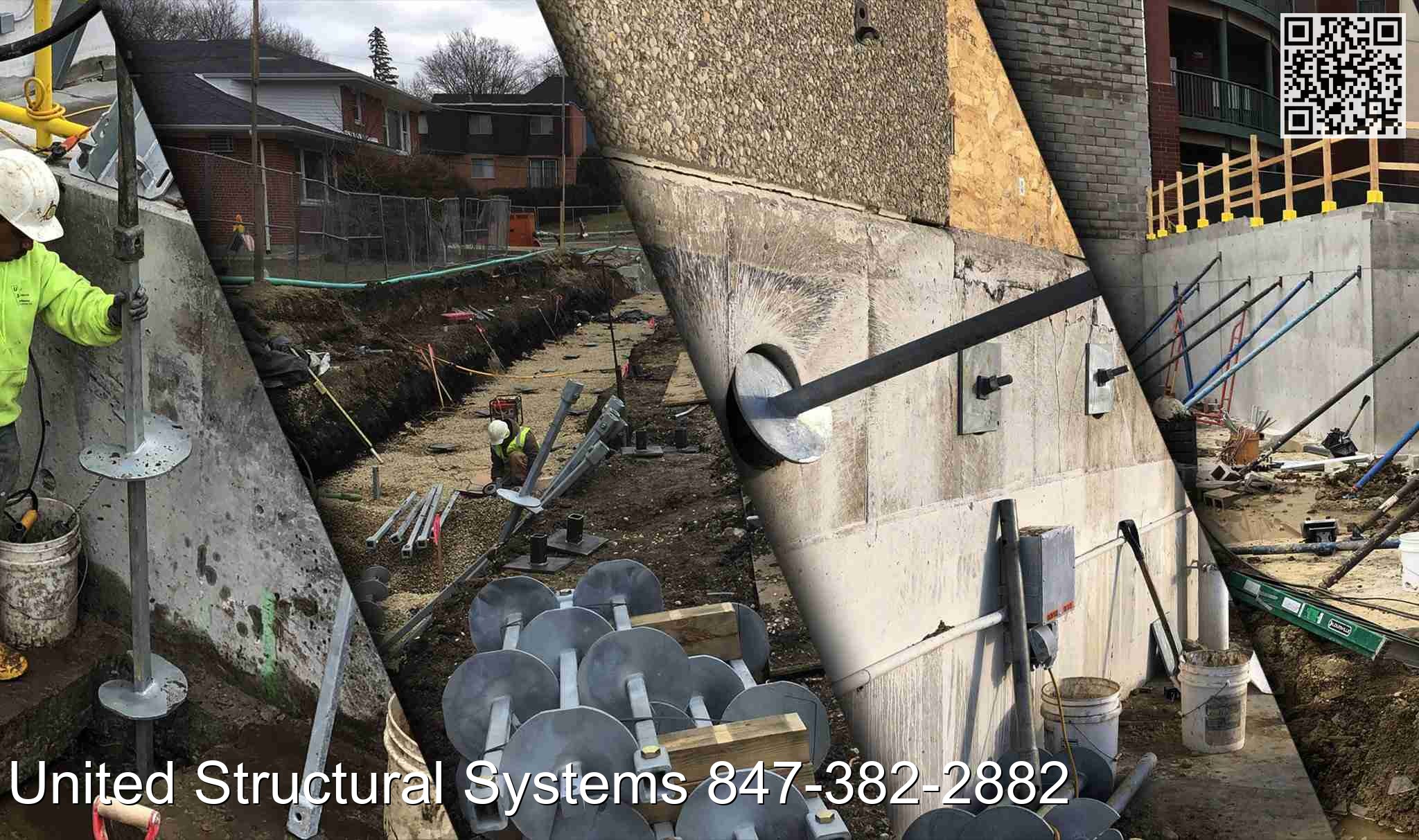
A helical anchor is actually a steel shaft along with one or more coil platters joined near the recommendation. During setup, the support is actually spun into the ground utilizing a gas travel, successfully drawing itself downward. Each coil bears on a separate dirt horizon, mobilizing ability in bearing as well as skin layer rubbing. For guyed towers, a helical tieback anchor or even upright helical pile may resist tension from the man lines as well as squeezing underneath the base plates or even legs. For monopoles, a pattern of vertical helical piles looped with a cap may bring gravitational force bunches and reversing, while ruined helical piles grab lateral and uplift components.
Unlike driven piles that depend on hammer energy and also make substantial vibrations, helical piles go in gently and with little spoils. If you have fiber options close by, a hospital part a block away, or even a multi-tenant records amenities along with vulnerable tools under the site, that installation profile alone can easily regulation in helical piles.
Where helical bodies match the high rise and also pole landscape
Communication constructs are actually restless concerning deflection and rotation. Microwave backhaul might endure just a fraction of a level of turning under service wind bunches. LTE door tilt has an effect on insurance coverage as well as interference. Stress in person wires must stay within tough limitations across seasons as temperature level and wind switch. That implies the structure body requires certainly not only raw capability but stiffness and low long-lasting creep.
Helical supports prosper in the observing instances:
- Soft to medium clays, silts, as well as sands where enduring levels are present within 15 to 60 feets. Setup twist associates along with ability in these soils, which allows on‑site confirmation without all-out payload tests on every anchor. Limited accessibility or remote sites where a 7,000 to 12,000 ft‑lb hydraulic ride head installed on a skid steer, miniature digger, or tracked carrier can go spots a drill gear can easily certainly not, featuring hill switchbacks or inside fenced in compounds. Sites along with reduced resistance for resonance as well as spoils, like rooftop masts where seepages and load roads must be controlled, or urban streets where mucking out a slurry will shut down traffic. Retrofit and deep foundation repair for high rises showing negotiation or shaking, where new helical piles could be incorporated via small cutouts in existing slabs or inside existing lower leg extensions.
In dense gravels with cobbles, cemented tills, or even superficial bedrock, helical piles are actually not the very first resource to get hold of. You may pre-drill captain gaps, but when much more than 10 to 20 per-cent of supports demand pre-drilling, the economics change toward driven or pierced possibilities, featuring micropiles. For extremely higher uplift needs in inadequate soils, large-diameter multi-helix anchors can work, but room and installment twist might become restricting, as well as you may find a better course with micropile installation and grouted bonds.
Loads that matter for towers
Every high rise base concept begins with bunch combos https://www.unitedstructuralsystems.com/northbrook/ as well as the regulating limit conditions. The typical load components are actually:
- Compression from gravitational force and wind reversing. Each leg or even pedestal sees a portion, commonly jagged in between windward and leeward sides. Uplift on the windward lower legs in a lattice tower or even on tension side of a monopole foundation. For guyed high rises, the man support takes prevalent uplift and also straight components. Lateral loads and also seconds transferred in to the bottom. Even with guyed units, base shear could be significant in ice tornados when person pipes stiffen.
For helical piles, squeezing ability originates from coil bearing and shaft rubbing. Uplift ability originates from the exact same mechanisms in pressure. Lateral capability may be provided by battered heaps, much deeper embedment, heap teams, or even supplementary devices like helical tieback anchors linked by means of a cap beam. Tieback anchors are especially helpful for guy bases where sizable uplift as well as side parts function in the line of the man. A helical tieback anchor set at an angle, usually 30 to 45 degrees coming from straight, aligns along with the tons and maintains connection eccentricities tiny, which limits rotation.
The command on style usually winds up being rotation as well as curvature, certainly not ultimate stamina. That is actually where slender shaft dimension, pile team spacing, and hat tightness issue. For high rises conscious utility, you may tune the limit density and also pile layout to always keep elastic turnings within limitations. If intended turnings are extremely tight, consider a mix of stack kinds or even larger shaft segments to increase tightness, or set helical piles along with a ring shaft that disperses loads.
Helical stacks compared to micropiles and protection piles
All deep foundation units have their spot. Helical piles are quickly, tidy, and also verifiable during the course of setup. Micropiles, which are tiny dimension pierced as well as grouted stacks along with steel support, flourish in dense filler, glacial till, and also regions with impediments where a rotary drill may accelerate and also grout sets in motion high connect durability to the ground. Resistance piles, occasionally named push piles, make use of the building as reaction to jack steel segments or pipe in to the ground. For brand new high rises, protection stacks hardly pencil since you do not have a structural response to drive against, however, for structural foundation repair under existing buildings or tools systems, they conduct well.
From field expertise on commercial foundation stabilization projects, helical piles dominate when access is actually constricted, dirt is actually reasonably penetrable, and also uplift is considerable. Micropiles control when the subsurface is nasty or even when you need to splice around rocks and also energies. Cost per kip of ability flips to and fro depending on use, twist head availability, cement coordinations, as well as screening needs. The most ideal technique is actually to price both when the geotechnical health conditions suggest a toss‑up as well as decide on based on risk and schedule.
Practical setup for high rise sites
A textbook specification are going to certainly not get you a dependable tower. You need purposeful setup criteria as well as screening protocols. The installer ought to bring a gas torque head with calibrated readout as well as a data lumberjack or even at least a log sheet recording intensity, twist, as well as any kind of refusal events. Installers track twist since it connects along with capability: even more torque usually indicates greater ground protection. The connection element depends on coil dimension, bar measurements, as well as dirt kind, therefore use market values supported by previous testing in similar dirts, not a common chart.
On a guyed tower construct near a tidal wetland, for example, our team made use of 1.75 inch square shaft supports with triple coils, 10-12-14 inch, set up to 35 to 45 feets. The minimal installation twist was 6,000 ft‑lb for company uplift capability around 30 to 40 kips per support along with a 2.0 safety and security aspect. We operated evidence exams on 10 percent of supports to 1.5 times design bunch with creep requirements of lower than 0.04 ins between 1 and also 10 mins. The installment took three times for twelve anchors, including mobilization and also demobilization throughout a slender slip road that could possibly not take a crane.
Torque is not every little thing. If you strike refusal at shallow depth with higher twist, you might still be partaking a slim heavy layer over smooth product, which may cause lasting creep. In layered accounts, go for helix layers to bear in proficient strata, separated through at least one helix size between layers. Stay away from ending a helix stack right at a sharp interface where unification underneath home plate can be jagged. When doubtful, expand much deeper or switch helix spacing to circulate load.
For tower lower legs or pole stands that need to have compression and uplift ability, use a group of vertical helical piles prepared around the substructure footprint and link them along with an enhanced concrete hat. If the pole sees big sidewise, add battered stacks angled away coming from the lots. For individual anchors, helical tieback anchors are actually steered along the man line, with the leading hookup installed in a concrete deadman or even taken flight to a steel grillage. The connection information are actually not unimportant: you desire to always keep free throw line of action near to the anchor chief to restrict bending tensions, and you need to guard the director coming from rust as well as freeze-thaw.
Testing, confirmation, and also acceptance
Owners and also providers perform not just like unpleasant surprises after antennas are dangled. A wise testing program goes a lengthy way.
- Proof testing: Select a part of helical anchors and fill all of them to 1.25 to 1.5 times the style tons, keeping in increments and capturing variation as well as creep. For tieback anchors, straighten the port with the anchor to stay away from bending. Verification of twist connection: On the initial few anchors of each type, contrast determined setup torque to pack test end results to verify the torque-to-capacity aspect. Change setup standards if needed. Tension as well as squeezing inspections under mock wind: Some ventures utilize organized person tensioning as well as foundation screw talk to a portable inclinometer. It is crude however successful for recording delicate anchors in a pattern.
When work involves commercial foundation repair on an existing high rise, add a before-and-after questionnaire. Fire the altitudes of lower leg foundation layers and also re-shoot after pile setup as well as grouting. If you are maintaining a foundation crack repair at a pedestal or even grade beam of light, spot crack assesses and paper motion by means of and after the work. It aids settle disagreements months eventually when seasonal heave brings in the same crack pop back.
Dealing along with deterioration and service life
Helical heaps as well as tieback anchors reside in the ground for decades, frequently in dirts that eat on steel. Galvanization is common, but certainly not a remedy for everything. Evaluate rust prospective based upon ground resistivity, pH, chlorides, sulfates, and redox potential. In slightly hostile dirts, hot-dip galvanization plus sacrificial steel thickness for fifty to 75 years is common. In threatening web sites, include polymer coverings or utilize grouted shafts where the cement gives a protective alkaline environment. For seaside and also de-icing salt direct exposure, take notice of relationships near grade where dash and also oxygen increase oxidation. Tape limits as well as use non-shrink grout to envelop left open steel where possible.
For man anchor heads, detail weather condition covers that really acquire replaced after stress inspections. I have found best supports with rotted scalp layers given that a person left the cover off for a winter, at that point the salts went to work.
When helical anchors are part of deep-seated base repair
Retrofitting is where creative thinking repays. I worked with a 180‑foot lattice high rise where the leeward lower leg cleared up regarding 3 fourths of an in over 4 years. The authentic ground was a superficial spread on overconsolidated silt, and also rising groundwater enhanced in season motion. Our experts installed two helical piles every lower leg through cored openings in the existing leg expansions and tied them to a new hat shaft. We preloaded the stacks slightly, then epoxied pegs into the old footing as well as grouted under the foundation plate to re-level. The tower returned to plumb within a fourth of an in, and also activities since then have actually remained under an eighth of an inch seasonally. That certifies as structural foundation repair that in fact takes care of the system, certainly not simply the symptom.
For commercial foundation stabilization beneath roof masts, low-headroom states drive the selection. Quick lead sections as well as expansions can easily serpent under existing ray of lights. The management changeable ends up being torque head response and scaffolding security during the course of installation. Micropiles may be the much better match where gain access to is also tighter and also grout lines can be managed indoors, however helical piles rank of no moist job and also quicker turnover.
Commercial helical tieback anchor installment for guyed towers
Guy anchors should have unique interest. An usual particular utilizes a helical tieback anchor put up at 35 levels with numerous coil plates sized for the uplift. The installer innovations the anchor till aim at twist as well as embedment are gotten to know, then hooks up to a steel grillage installed in a reinforced concrete block at quality. For high-capacity men, multiple tiebacks could be bundled to a solitary grillage along with a spreader beam of light, permitting verboseness. The key points are actually placement along with the individual tons, corrosion defense ahead, and accurate tensioning. If the tieback position is steeper than organized, the upright element of lots grows and you may wind up under-designed in uplift on the behind of the support group. Field teams at times adjust slants to steer clear of a boulder or even a stashed line; see to it the style staff endorse any sort of such changes considering that the angle mathematics alters the called for capacity.
Edge cases as well as trade-offs
- Expansive clay-baseds: Helical piles can easily bypass the energetic region when put in to midsts past in season wetness swings. Still, damaging skin rubbing during shrink-swell patterns may chew on capability. If heave is considerable, segregate the heap shaft coming from the swelling dirt along with sleeves or even use hassle-free pipe parts via the active layer. Permafrost or even seasonally frosted dirts: Setup torque analyses could be deceiving when frost-stiffened dirts make it seem like capacity is actually higher. Work in thaw time or even predrill with frost. Karst surface: Helical piles entering gaps may drop twist instantly as well as drop capability. Take into consideration micropiles along with grout to link voids, or utilize a much larger helix space that avoids tooth cavity regions recognized through geophysics or even exam borings. Seismic locations: Helical piles have succeeded under periodic loading when adequately described, yet group effects and liquefaction should be actually dealt with. If liquefaction is actually possible, the support might shed surrounding dirt help. Micropiles along with deep-seated grouted bonds into thick or rock layers may be even more reliable.
Installation process that maintains ventures on schedule
Field coordinations choose whether helical anchors supply the guaranteed timetable financial savings. A regimented workers may scoot, but reducing edges on format as well as torque logging deteriorates the quality you are counting on. A basic, five-step rhythm works for most high rise sites:
- Stake places along with offsets, validate against as‑built control, and crystal clear electricals along with suction potholing where needed. Pre-assemble top sections and also coils, verify coil order and also spacing, and phase extensions so the operator never waits. Advance supports while logging depth and torque every feet, pausing merely to confirm that twist fads match ground requirements. If twist spikes early, pull back as well as think about predrilling a pilot. Terminate at the pointed out twist as well as depth, specified leading elevations, as well as instantly hat or even safeguard heads from water intrusion. Perform verification tests and keep factors prior to placing limits or grillage concrete, at that point proceed with hats, backfill, and also man tensioning.
That tempo permits quick comments. If the 1st two supports set up differently than anticipated, the field designer can easily change. That can suggest altering coil dimension, incorporating a helix platter, or even switching an anchor a handful of feet to prevent a hidden outdated footing that the test pits missed.
Costs, procurement, and also submittals that matter
Bid contrasts on helical work are actually unsafe if you perform certainly not determine approval. Need submittals along with:
- Installer certifications and also equipment twist ratings along with gradation certificates. Helix setups, shaft measurements, and rust defense details. Proposed torque-to-capacity correlation aspects based upon similar tasks and also soils, with a minimum of one bunch examination reference. Testing strategy with approval standards for creep and displacement. Weld accreditations as well as product buildings of the piles.
Unit costs must feature mobilization, installment per direct foot, proof screening, as well as scalp particular. Expect exemptions on rock, predrilling, or spoil fingertip. If the website possesses any sort of odds of rejection in the first 10 feet, demand an alternative cost for aviator openings so you are actually not haggling in the mud.
On a latest commercial helical pile installation for a small urban monopole, defining these items up front slice adjustment orders to near absolutely no and kept the crane opportunity to 1 day. On a different website with a gentle hat over heavy crushed rock, we negotiated a crossbreed: helical piles for two lower legs as well as micropiles for the windward leg where rejection pestered the coils. Flexibility beat dogma.
Repairing splits and also maintaining existing foundations
Foundation crack repair around high rise substructures is actually certainly not cosmetic. A diagonal gap at a base plate can signify stress beyond what the concrete can easily handle. If you observe widening over times, examine support pressure as well as base action all together. Sewing cracks along with epoxy alone is actually a band‑aid. Blend it along with added deep foundation elements where required. For instance, include pair of small heaps doweled in to a beam under the pedestal, or even put up quick helical piles through the piece connected into a brand new ring beam. Along with the brand new assistance involved, epoxy shot can easily rejuvenate connection and also assist with circulation of stresses. Documentation the steel support style when you primary, because records on heritage high rises are actually commonly incomplete.
Long-term maintenance as well as monitoring
After construction, the structure vanishes from focus until a failure. Add it to the servicing course. Throughout annual or even biannual tower examinations, possess workers:
- Visually assess anchor heads and also hats for corrosion, fractured grout, or motion relative to grade. Verify person tensions as well as compare with baseline reports. Unforeseen changes can easily mean base activity or even prolongation in the lots path. Document any type of settlement deal markers or even tilt analyses. Small designs are usual; styles are not.
If cultivating a portfolio requirement for commercial foundation stabilization throughout multiple tower kinds, specify typical evaluation factors as well as a simple data bank to hold twist logs, bunch examinations, guy strains, and poll data. When storms strike, you will know which sites deserve 1st attention.
Tying it back to the larger toolbox
Helical anchors, helical piles, and helical tieback anchors are actually core resources for modern-day high rise bases. They sit together with micropiles, resistance heaps, as well as typical cement foundations. The clever play is certainly not to pick a favorite, but to pick based on grounds, loads, accessibility, as well as risk. A trustworthy commercial helical pile installation in silty sands are going to top a limited micropile job that fought obstructions all full week. A tidy micropile installation in frosty till will hammer a helical project that tried to chew via cobbles and spent days predrilling. For commercial resistance pile installation, presume retrofit and deep foundation repair where the existing framework provides reaction as well as area is tight.
The best tasks are the ones where design, area screening, and setup align. Receive the geotechnical surveillance right, specify approval early, and collaborate with installers that log twist as well as examination loads rather than estimate. For communication towers and also industrial masts, that discipline translates directly right into uptime, far fewer site visits, and also designs that persevere when the weather is unkind.